Lactose Intolerance
Understanding causes, symptoms, and management
Lactose intolerance is when the body cannot fully digest lactose, a sugar found in milk and dairy products. It is caused by a shortage of the enzyme lactase, which the small intestine normally uses to break lactose down into simpler sugars (glucose and galactose) for absorption. [1,2]
Lactose intolerance is not the same as a cow's milk allergy. A milk allergy is an immune response that can be life-threatening even in tiny amounts and usually appears in the first year of life. Lactose intolerance is far more common and typically develops in adolescence or adulthood.
What are the causes?
- Primary lactase deficiency: the most common type. The body naturally produces less lactase over time, starting around age 2. Symptoms usually appear in adolescence or adulthood. There is a genetic link. [1,2]
- Secondary lactase deficiency: caused by damage to the small intestine from severe diarrhoea, coeliac disease, Crohn's disease, or chemotherapy. Can occur at any age.[2]
Who is more at risk?
- Older adults
- People of African American, Hispanic, American Indian, or Asian heritage
- Premature babies, whose lactase levels are still developing
Lactose intolerance is least common in people of Northern European heritage.[1]
Symptoms
Symptoms usually appear 30 minutes to 2 hours after consuming dairy. Common symptoms include: [1,4]
- Abdominal pain or cramping
- Bloating
- Gas
- Diarrhoea
- Nausea
The severity depends on how much lactose was consumed and how sensitive the person is.
Diagnosis
A doctor may first suggest eliminating dairy temporarily to see if symptoms resolve. Two tests are commonly used to confirm:[2]
- Hydrogen breath test: you drink a lactose solution, then breath samples are taken at regular intervals. Undigested lactose produces high levels of hydrogen in the breath. Smoking and some foods or medications can affect accuracy.
- Stool acidity test: mainly used for infants and young children. Undigested lactose creates acids detectable in a stool sample.
Management
While the body cannot be made to produce more lactase, symptoms can be well managed through diet: [1,2]
- Eat dairy in small amounts spread throughout the day rather than all at once.
- Have dairy with meals; food slows digestion and may reduce symptoms.
- Choose lower-lactose dairy: hard cheeses, yogurt with live cultures, and lactose-free milk.
- Use lactase enzyme drops or tablets (e.g. Lactaid) just before eating foods with lactose.
- Try dairy-free alternatives: soy, almond, rice, or oat milk.
Calcium and vitamin D
Dairy is a major source of calcium and vitamin D. If dairy is reduced, ensure adequate intake from other sources:[3]
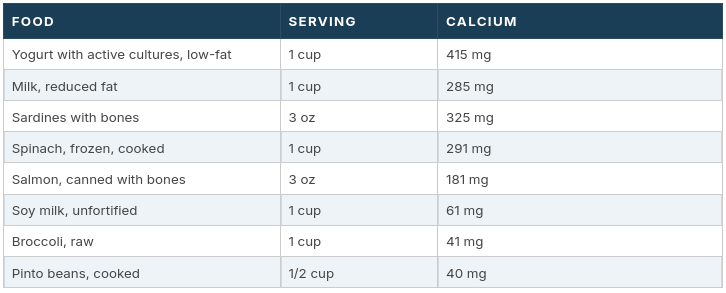
Vitamin D helps the body absorb calcium. Sources include sunlight, eggs, liver, fatty fish, and fortified dairy-free beverages. Adults need 600 IU (15 mcg) daily. Ask your doctor about supplementation.
Hidden sources of lactose
Lactose is often added to processed foods. Check labels for: milk, lactose, whey, curds, milk by-products, dry milk solids. Common hidden sources include:
- Breads and baked goods
- Breakfast cereals, waffles, pancakes, and biscuit mixes
- Instant potatoes, soups, and breakfast drinks
- Processed meats (bacon, sausage, luncheon meats)
- Margarine, salad dressings, protein bars and powders
- Lollies and chocolates
Medications Lactose is used as a filler in some prescription and over-the-counter medications. Ask your pharmacist if you are concerned. |
Resources and suport
- Dietitians Australia: www.dietitiansaustralia.org.au - Find an Accredited Practising Dietitian
- Osteoporosis Australia: 1800 242 141 | www.osteoporosis.org.au - Calcium, vitamin D, and bone health resources
- Dairy Australia: www.dairy.com.au - Information on lactose-free dairy products available in Australia
- Jean Hailes for Women's Health: www.jeanhailes.org.au - Digestive health resources for women
References
1.Suchy FJ, et al. (2010). NIH Consensus Development Conference: Lactose Intolerance and Health. NIH Consensus and State-of-the-Science Statements, 27(2), 1-27.
2.Misselwitz B, et al. (2019). Update on lactose malabsorption and intolerance: pathogenesis, diagnosis and clinical management. Gut, 68(11), 2080-2091.
3.National Health and Medical Research Council (NHMRC). (2013). Australian Dietary Guidelines.https://www.eatforhealth.gov.au
4.Matthews SB, et al. (2005). Systemic lactose intolerance: a new perspective on an old problem. Postgraduate Medical Journal, 81(953), 167-173.
About the author
Dr Krishan Pratap is a Brisbane gastroenterologist and hepatologist with subspecialty expertise in inflammatory bowel disease. He completed an Advanced IBD Fellowship at McMaster University Hospital in Canada and has clinical experience in gastroenterology, hepatology, endoscopy and intestinal ultrasound.
You can reach out to his practice on 07 3063 1273 or submit a referral or new patient form on the referral page and his practice will reach out to you.