Eating less lactose
Managing lactose intolerance through diet
Lactose is a sugar found naturally in milk and dairy products. It can also be added to other processed foods and some medications.
What is lactose intolerance?
Lactose intolerance means the gut cannot properly break down lactose. People with this condition do not produce enough of an enzyme called lactase, which is needed to digest lactose. When lactose is not broken down, it passes into the large intestine where bacteria ferment it, producing gas and excess fluid. This causes:[3]
- Bloating
- Diarrhoea
- Abdominal cramping and gas
Everyone's tolerance is different. Some people can manage small amounts of lactose without any symptoms, while others need to avoid it completely. Lactose intolerance can be temporary or permanent depending on the cause. It is not the same as a milk allergy.
Identifying lactose in foods
Read ingredient labels carefully. Look for:[4]
- Lactose, milk, milk solids, or non-fat milk powder
- Whey or curds
- Cheese flavour or modified milk ingredients
- Lactalbumin, lactate, lactic acid, or casein
Label claims to look for:
- "Lactose free" - no measurable lactose
- "Lactose reduced" - lactose reduced by at least 25%
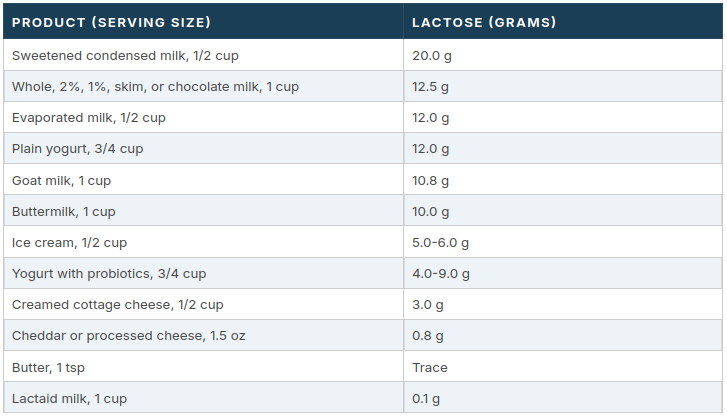
Estimated lactose content of common dairy products
Approximate lactose content per serving:[3]
Tips for reducing lactose
- Choose lactose-free or low-lactose dairy products.
- Buy yogurt and kefir with live bacterial cultures (probiotics); these are usually better tolerated. Look for lactose-reduced yogurts.
- Use lactose-free milk, calcium-fortified soy milk, or rice milk in cooking and baking.
- If you can tolerate some lactose, spread intake throughout the day and eat dairy with meals rather than alone.
- Try casein or soy-based cheese alternatives.
- Use lactase enzyme drops or tablets (Lactaid); take with food that contains lactose. Drops can be added to milk 24 hours in advance.
- Check labels on margarines; some contain lactose unless labelled "non-dairy".
- Some commercial salad dressings contain lactose; try a simple oil-and-vinegar dressing.
- Ask your pharmacist whether your medications contain lactose.
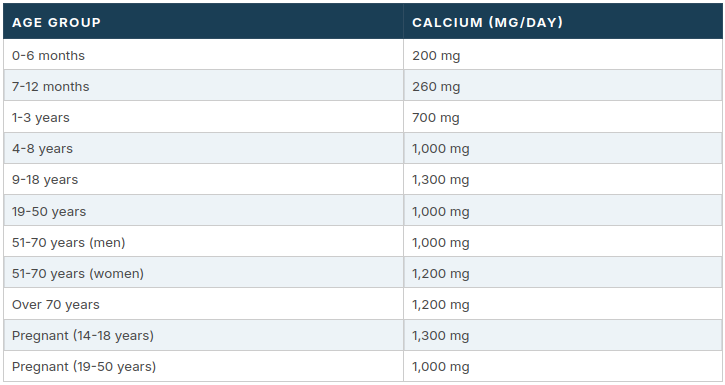
Calcium and bone health
Calcium is essential for strong bones. If dairy is reduced, get calcium from other sources. Estimated daily intakes for Australians:[1]
Non-dairy calcium sources include salmon and sardines with bones, leafy green vegetables (spinach, bok choy, kale), calcium-fortified soy and rice beverages, tofu, almonds, and legumes.
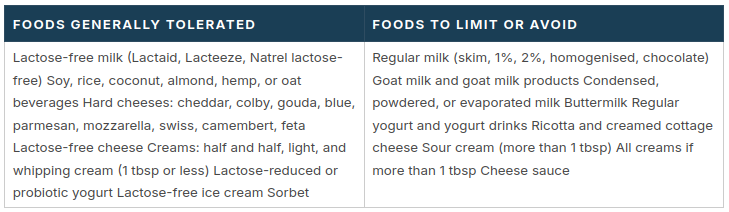
Foods with and without lactose
Resources and support
- Dietitians Australia: www.dietitiansaustralia.org.au - Find an Accredited Practising Dietitian near you
- Dairy Australia: www.dairy.com.au - Information on dairy nutrition and lactose-free products
- Osteoporosis Australia: 1800 242 141 | www.osteoporosis.org.au - Bone health and calcium resources
- Eat for Health (NHMRC): www.eatforhealth.gov.au - Australian dietary guidelines and calcium recommendations
References
1.National Health and Medical Research Council (NHMRC). (2006). Nutrient Reference Values for Australia and New Zealand.https://www.nhmrc.gov.au
2.Dietary Guidelines for Americans 2020-2025. US Department of Agriculture and US Department of Health and Human Services.
3.Suchy FJ, et al. (2010). NIH Consensus Development Conference Statement: Lactose Intolerance and Health. NIH Consensus and State-of-the-Science Statements, 27(2).
4.Food Standards Australia New Zealand (FSANZ). (2024). Nutrition labelling.https://www.foodstandards.gov.au
About the author
Dr Krishan Pratap is a Brisbane gastroenterologist and hepatologist with subspecialty expertise in inflammatory bowel disease. He completed an Advanced IBD Fellowship at McMaster University Hospital in Canada and has clinical experience in gastroenterology, hepatology, endoscopy and intestinal ultrasound.
You can reach out to his practice on 07 3063 1273 or submit a referral or new patient form on the referral page and his practice will reach out to you.