Low Fibre Diet
Guidance for reducing dietary fibre intake
A low fibre diet contains less than 10 grams of fibre per day. It reduces the amount of bulky material moving through your intestine. Your doctor may have recommended it because you:[1,2]
- Have an ileostomy, to prevent a stoma blockage
- Have a narrowed section of bowel (stricture), to reduce the risk of further blockage
- Are preparing for a bowel procedure
After this time, ask your doctor or ostomy nurse whether you can slowly reintroduce foods. Try adding one new food every 1 to 3 days to see how you respond.
Tips
- Eat slowly and chew every mouthful thoroughly; chewing is the first step in digestion and is especially important on this diet.
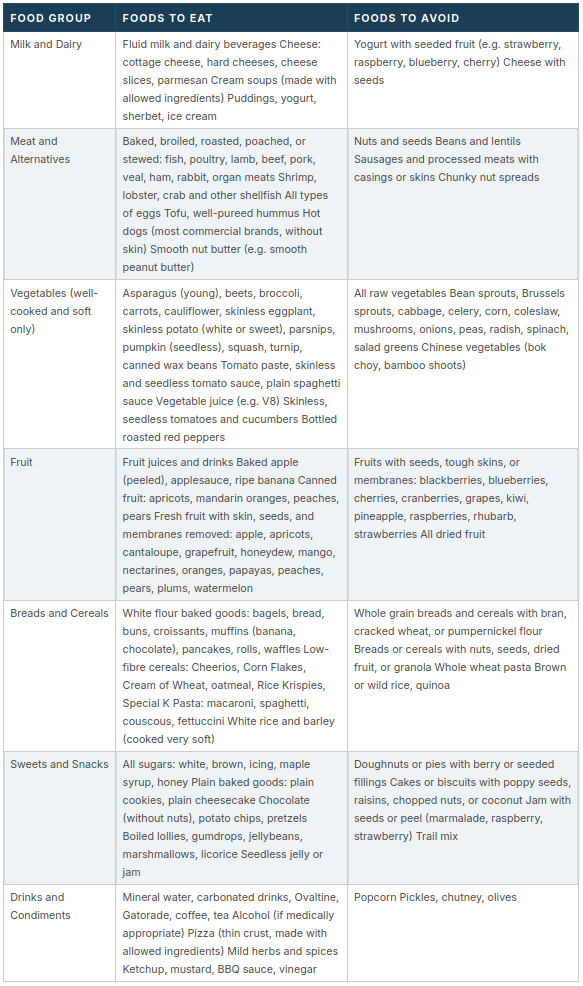
- Always avoid these high-risk foods: nuts and seeds, corn, bean sprouts, mushrooms, popcorn, and coconut.
- If you are unsure whether a food is safe, leave it out.
Signs of an intestinal blockage
Know the warning signs and act promptly if they occur:[3]
- Abdominal cramping and bloating
- Nausea and vomiting
- Little or no bowel output
If you have an ileostomy, additional signs include: excessive watery output, no stoma output, or a swollen or tender stoma.
What to do if you think you have a blockage Try to stay calm. You can try to take a warm bath and gently massage your abdomen. If symptoms have not improved after 6 hours or if you have any concerns, call your doctor, ostomy nurse, or go to the emergency department. |
Foods to eat and to avoid
Resources and support
- Ostomy Australia: www.ostomyaustralia.com.au - Support and resources for people with ileostomy or colostomy
- Dietitians Australia: www.dietitiansaustralia.org.au - Find an Accredited Practising Dietitian experienced in bowel health
- Australian Council of Stoma Associations: www.australianstoma.com.au - Resources and support for stoma patients across Australia
References
1.Stollman N, Smalley W, Hirano I; AGA Institute Clinical Guidelines Committee. (2015). American Gastroenterological Association Institute Guideline on the Management of Acute Diverticulitis. Gastroenterology, 149(7), 1944-1949.
2.Nazarenkov N, et al. (2019). Implementing Dietary Modifications and Assessing Nutritional Adequacy of Diets for Inflammatory Bowel Disease. Gastroenterology and Hepatology, 15(3), 133-144.
3.Ostomy Australia. (2024). Diet after stoma surgery.https://www.ostomyaustralia.com.au
About the author
Dr Krishan Pratap is a Brisbane gastroenterologist and hepatologist with subspecialty expertise in inflammatory bowel disease. He completed an Advanced IBD Fellowship at McMaster University Hospital in Canada and has clinical experience in gastroenterology, hepatology, endoscopy and intestinal ultrasound.
You can reach out to his practice on 07 3063 1273 or submit a referral or new patient form on the referral page and his practice will reach out to you.