Hepatitis C
Understanding hepatitis C's diagnosis, treatment, and path to cure
Hepatitis C is a liver disease caused by the hepatitis C virus (HCV). The virus is transmitted through blood-to-blood contact and can cause both short-term (acute) and long-term (chronic) infection. Unlike hepatitis A and B, there is no vaccine for hepatitis C. However, hepatitis C is now curable in almost all people with modern treatment.[1,2]
In Australia, hepatitis C affects approximately 120,000 people. Many do not know they have it because the infection often causes no symptoms for years or even decades, during which time it can silently damage the liver.[4]
How it spreads
Hepatitis C is spread when blood from an infected person enters another person's bloodstream. The most common routes of transmission in Australia are:[1,3]
- Sharing needles, syringes, or other drug injecting equipment
- Tattooing or piercing with unsterile equipment
- Needlestick injuries in health care settings
- Blood transfusions or organ transplants received before 1990 in Australia (blood supply has been screened since then)
- Mother to baby during pregnancy or childbirth (less common)
- Sharing personal items that may carry blood (such as razors or toothbrushes)
- Unprotected sexual contact, particularly where blood may be present (uncommon but possible)
Important Hepatitis C is NOT spread through hugging, kissing, coughing, sneezing, sharing food or drink, or casual contact. |
Stages of infection
Acute hepatitis C
The acute phase occurs in the first 6 months after infection. Most people have no symptoms, or only mild and non-specific symptoms such as fatigue, nausea, and jaundice (yellowing of the skin and eyes). Between 25-45% of people clear the virus naturally during this phase. The rest go on to develop chronic infection.[1]
Chronic hepatitis C
If the infection is not cleared within 6 months, it becomes chronic. Over time, chronic hepatitis C causes ongoing liver inflammation, which can progressively lead to:[1,2]
- Liver fibrosis (scarring)
- Cirrhosis (advanced scarring, affecting liver function)
- Liver failure
- Liver cancer (hepatocellular carcinoma)
The progression of liver damage is slow and highly variable. Some people develop significant liver damage within 10-20 years; others may have minimal damage after 30 or more years. Factors that accelerate progression include heavy alcohol use, obesity, co-infection with hepatitis B or HIV, and male sex.
Symptoms
Chronic hepatitis C is often called a "silent" disease because most people have no symptoms until the liver is significantly damaged. When symptoms do occur, they may include:[1,3]
- Fatigue (the most common symptom)
- Abdominal discomfort, particularly in the upper right area
- Nausea and poor appetite
- Joint and muscle pain
- Difficulty concentrating ("brain fog")
- Depression or anxiety
In advanced liver disease (cirrhosis), more serious symptoms may appear, including jaundice, fluid accumulation in the abdomen (ascites), easy bruising and bleeding, and confusion (hepatic encephalopathy). See the Cirrhosis fact sheet for more information.
Who should be tested?
Because hepatitis C often causes no symptoms, testing is the only way to know if you are infected. Testing is recommended for:[1,7]
- Anyone who has ever injected drugs, even once
- People who received blood transfusions or organ transplants in Australia before 1990
- People born in countries with a high prevalence of hepatitis C (including parts of Asia, Africa, the Middle East, and Eastern Europe)
- People who have been in prison
- Children born to mothers with hepatitis C
- Health care workers who have had a needlestick injury
- People with unexplained liver disease or elevated liver enzymes on a blood test
- Sexual partners of people with hepatitis C
Testing in Australia Hepatitis C testing is simple: a single blood test checks for hepatitis C antibodies (HCV antibody test). If positive, a second test (HCV RNA or PCR test) confirms whether the virus is still active. Both tests can be ordered by your GP.[1,7] Testing is free for everyone with a Medicare card. Rapid point-of-care tests are also available through some community health services. |
Diagnosis
Once a hepatitis C infection is confirmed, further tests help assess the extent of liver damage and guide treatment:[1,2]
- HCV genotype test: identifies which of the 6 main strains (genotypes) of hepatitis C you have. This can influence treatment choice, though most modern treatments work across all genotypes.
- Liver function tests (LFTs): blood tests that measure liver enzymes and proteins to assess how well the liver is working.
- FibroScan (transient elastography): a non-invasive ultrasound-based scan that measures the stiffness of the liver, which indicates the degree of scarring (fibrosis). This is the preferred method to assess liver damage without a biopsy.
- FIB-4 score: a simple calculation using age and blood test results (ALT, AST, and platelet count) to estimate the degree of liver fibrosis.
- Liver biopsy: a needle takes a small tissue sample from the liver for examination under a microscope. Less commonly used now that non-invasive tests are available.
- Abdominal ultrasound: checks the liver for structural changes, cirrhosis, and signs of liver cancer. People with cirrhosis need regular ultrasound surveillance every 6 months.
Treatment
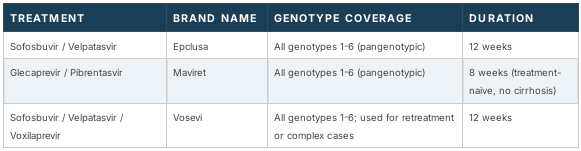
Hepatitis C treatment has been transformed by direct-acting antiviral (DAA) medications. These oral tablets work directly against the hepatitis C virus and achieve cure rates of over 95%, with very few side effects and short treatment courses. In Australia, DAA treatments have been available on the PBS, free of charge to all Medicare card holders, since March 2016.[1,5,6,8]
Treatment typically involves taking one or two tablets once daily for 8-12 weeks. Most people complete treatment with minimal disruption to daily life.
What does "cure" mean? Cure is confirmed by a blood test called a Sustained Virological Response (SVR). This means the virus is undetectable in the blood 12 weeks after completing treatment. An SVR is achieved in over 95% of people who complete a course of DAA treatment. After cure:[1,5]
|
Side effects of treatments
Modern DAA treatments are generally very well tolerated. Possible side effects include:[1,5,6]
- Headache
- Fatigue
- Nausea
- Insomnia
Serious side effects are rare. Some medications may interact with other drugs, including some heart medications, anticonvulsants, and supplements. Tell your doctor about all medications, supplements, and herbal products you take before starting treatment.
MONITORING AFTER TREATMENT
After completing treatment:[1,2]
- A blood test is performed 12 weeks after finishing treatment to confirm cure (SVR12)
- People with cirrhosis continue to need 6-monthly liver ultrasound and AFP blood test to screen for liver cancer, even after cure
- People with advanced fibrosis or cirrhosis should continue regular specialist follow-up, as some liver complications may persist even after the virus is cleared
- Liver function tests are repeated to monitor ongoing liver health
Alcohol and Liver Health Alcohol causes direct liver damage, and this damage is accelerated in people with hepatitis C. Reducing or stopping alcohol intake is strongly recommended during treatment and beyond. Speak with your doctor or a health professional about support to reduce alcohol use if needed. |
Preventing transmission
If you have active hepatitis C infection, the following steps protect others:[1,3]
- Never share needles, syringes, or other injecting equipment
- Do not share razors, toothbrushes, nail clippers, or other personal items that may carry blood
- Cover open cuts or sores
- Tell health care providers (doctors, dentists, nurses) about your hepatitis C status
- Use sterile tattooing and piercing equipment
- If pregnant, discuss the risk of transmission to your baby with your doctor
You do not need to avoid sexual contact, but using condoms reduces the risk of transmission if blood is present. Hepatitis C is not transmitted through casual contact.
Mental health
Living with hepatitis C can significantly affect mental health. Depression, anxiety, and stigma are common. Additionally, some older hepatitis C treatments (interferon-based) caused significant psychiatric side effects, though these are no longer used. Modern DAA treatments do not affect mental health. Support from a psychologist, counsellor, or hepatitis peer support worker can be very helpful.[3]
Resources
- Hepatitis Australia: 1800 437 222 | www.hepatitisaustralia.com - National peak body for hepatitis organisations; information, support, and peer education
- Hepatitis NSW: 1800 803 990 | www.hep.org.au - Information, peer education, and support for people with hepatitis C
- Hepatitis Queensland: 1800 437 222 | www.hepatitisqueensland.org.au - Support, education, and advocacy for Queenslanders living with hepatitis C
- ASHM (Australasian Society for HIV, Viral Hepatitis and Sexual Health Medicine): www.ashm.org.au - Clinical guidelines and specialist referral for hepatitis C management
- Australian Government - PBS: www.pbs.gov.au - Check PBS coverage for direct-acting antiviral hepatitis C treatments (free to all Medicare card holders)
- Lives Lived Well (harm reduction and drug support): 1800 007 007 | www.liveslivedwell.org.au - Support for people who use drugs, including hepatitis C prevention and testing information
References
- Australasian Society for HIV, Viral Hepatitis and Sexual Health Medicine (ASHM). (2024). Australian recommendations for the management of hepatitis C virus infection: a consensus statement. https://www.ashm.org.au
- Gastroenterological Society of Australia (GESA). (2023). Hepatitis C: position statement. https://www.gesa.org.au
- Hepatitis Australia. (2024). Understanding hepatitis C. https://www.hepatitisaustralia.com
- Dore GJ, et al. (2019). Hepatitis C virus infection, antiviral treatment and outcomes in Australia. Medical Journal of Australia, 211(6), 257-262.
- Zeuzem S, et al. (2014). Sofosbuvir and velpatasvir for HCV genotypes 1, 2, 3, 4, 5, and 6. New England Journal of Medicine, 373(27), 2599-2607.
- Feld JJ, et al. (2020). Glecaprevir and pibrentasvir for 8 weeks in treatment-naive patients with chronic HCV infection. Gastroenterology, 158(6), 1715-1724.
- Australian Government Department of Health. (2024). National hepatitis C testing policy. https://www.health.gov.au
- Australian Pharmaceutical Benefits Scheme (PBS). (2024). Direct-acting antiviral treatments for hepatitis C. https://www.pbs.gov.au
- Cancer Council Australia. (2024). Liver cancer and hepatitis C. https://www.cancer.org.au
About the author
Dr Krishan Pratap is a Brisbane gastroenterologist and hepatologist with subspecialty expertise in inflammatory bowel disease. He completed an Advanced IBD Fellowship at McMaster University Hospital in Canada and has clinical experience in gastroenterology, hepatology, endoscopy and intestinal ultrasound.
You can reach out to his practice on 07 3063 1273 or submit a referral or new patient form on the referral page and his practice will reach out to you.